Browse Resources
Blog
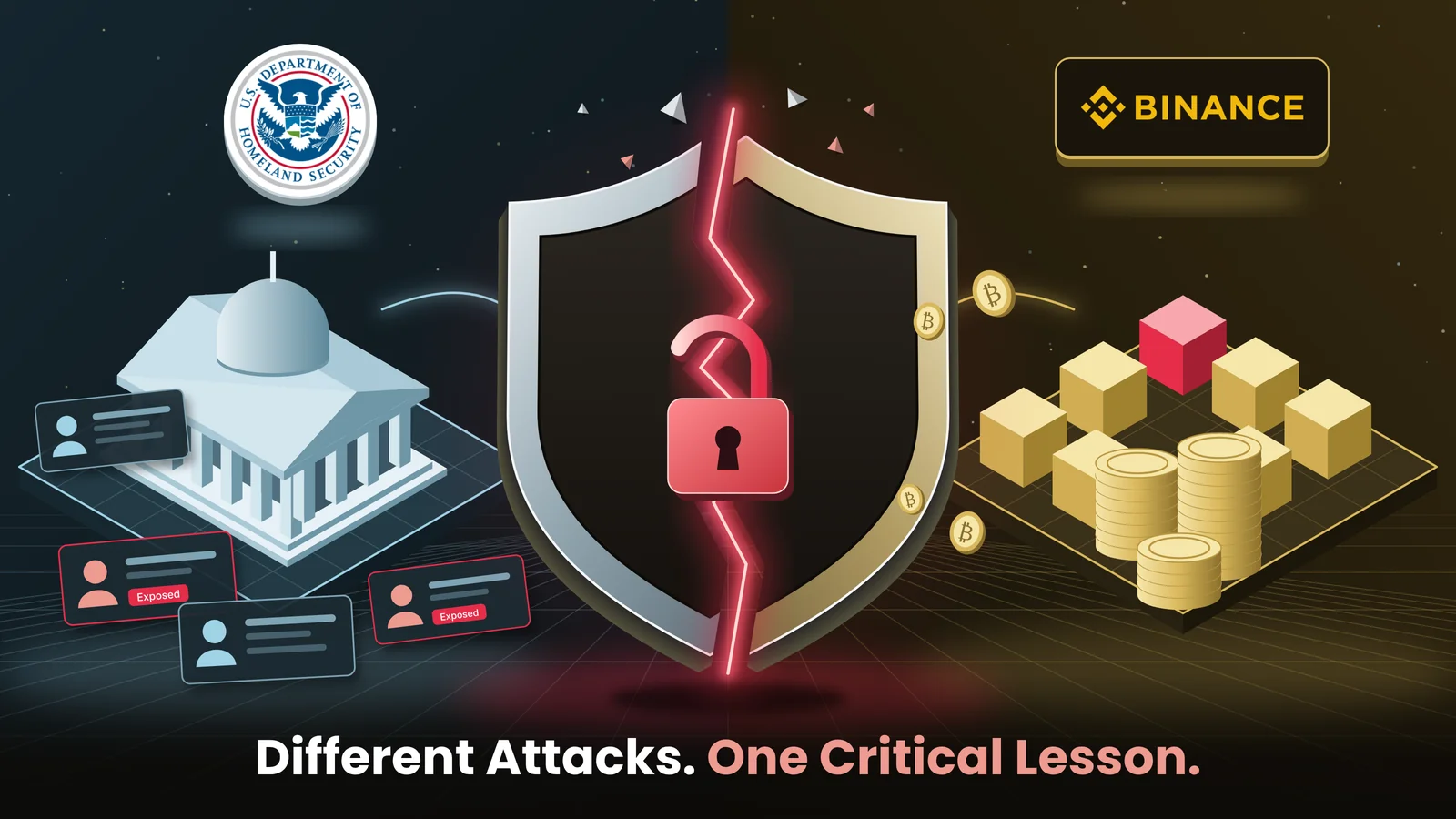
Two Major Cyberattacks. One Critical Lesson: Cybersecurity Is Only as Strong as the People Behind It.
What the DHS data breach and $6.3 billion Binance hack reveal about identity security, operational resilience, and the growing need for specialized cybersecurity talent.
Two major cybersecurity incidents dominated headlines in the last week of October 2026, exposing vulnerabilities in organizations operating at vastly different ends of the digital landscape.
In the United States, the Department of Homeland Security (DHS) acknowledged a potential breach after work details associated with more than 40,000 employees and contractors, including personnel connected to Immigration and Customs Enforcement (ICE) and Customs and Border Protection (CBP), were reportedly published online on October 28.
Meanwhile, cryptocurrency exchange Binance reported a cyberattack involving approximately $6.3 billion in digital assets on October 29. The reported amount exceeds the $1.5 billion Bybit theft of February 2025 by more than fourfold, potentially making it the largest cryptocurrency theft on record.
One involves sensitive government personnel information. The other involves billions of dollars moving through digital financial infrastructure.
Different targets. Different consequences. But both raise a question every organization should be asking:
Are organizations investing as much in the people responsible for securing their technology as they are in the technology itself?
Cybersecurity is no longer simply about protecting systems. It is about securing identities, controlling access, understanding interconnected infrastructure, and maintaining the expertise to respond when defenses are tested.
Behind every security platform, vulnerability assessment, and incident response plan are the professionals responsible for making those defenses effective.
The DHS Data Breach: When Identity Becomes a Security Vulnerability
The DHS incident exposed work details associated with more than 40,000 employees and contractors, while the group claiming responsibility alleges it accessed the data through an identity management system.
According to reporting from The Washington Post and CNBC, the exposed information included names, job titles, work email addresses, phone numbers, office locations, and, in some cases, managers. Some undercover investigators were reportedly among those identified.
A hacktivist group calling itself the "Department of Peace" claims it obtained the information through the single sign-on system used to manage DHS employee access. Identity provider Okta has stated that its own systems were not compromised, while DHS has not publicly confirmed the precise intrusion method.
For government agencies, the exposure creates risks ranging from targeted phishing and impersonation to threats against individuals working in sensitive positions.
For enterprises, the implications extend far beyond government systems.
Employees, contractors, third-party providers, and automated services all require access to business-critical technologies. Each identity represents a potential entry point if credentials, permissions, or authentication controls are compromised.
Organizations may invest in multifactor authentication, identity governance, and privileged access management. But these technologies require professionals who can identify weaknesses, investigate suspicious activity, and continuously evaluate access as business requirements change.
The lesson: Identity security is not a one-time technology investment. It is an ongoing operational capability that depends on specialized expertise.
The Binance Hack: Billions at Risk in Minutes
Approximately $6.3 billion in digital assets was reportedly moved out of Binance wallets in roughly 20 minutes, illustrating how quickly a technical compromise can escalate into a major financial and operational crisis.
According to Associated Press and other reporting, Binance estimated that approximately $6.3 billion in digital assets was affected across ten blockchains. Blockchain analytics estimates have ranged from approximately $6 billion to $6.4 billion, depending on token valuations.
Subsequent reporting indicated that approximately $3 billion in affected assets had been frozen, while Binance stated it would cover user losses.
According to BleepingComputer, Binance said the attack may have begun with a compromised DevOps engineer's laptop, potentially providing access to a service container used to submit withdrawal transactions. Binance subsequently reported additional compromise points and said it had found no evidence that wallet private keys were leaked.
Blockchain analytics firms TRM Labs and Chainalysis have reportedly linked the attack with high confidence to TraderTraitor, a North Korea-linked hacking group. Binance has not confirmed that attribution, and the investigation remains ongoing.
The implications extend far beyond cryptocurrency.
Financial institutions, SaaS providers, cloud companies, and organizations adopting AI increasingly depend on APIs, development pipelines, automated workflows, and interconnected platforms.
A compromised technical account or vulnerable integration can potentially expose multiple systems, with consequences escalating faster than traditional investigation processes can respond.
This makes DevSecOps, penetration testing, secure engineering, and incident response essential capabilities.
Organizations need professionals who understand how systems are built, how they connect, where vulnerabilities may exist, and how to contain threats without disrupting critical operations.
The lesson: Protecting modern technology requires professionals who understand not only how attackers operate, but how the systems they defend are built, connected, and maintained.
 | DHS Data Breach | Binance Hack |
|---|---|---|
| Date | October 28, 2026 | October 29, 2026 |
| Target | DHS personnel, including ICE, CBP, HSI, and CISA | Binance cryptocurrency infrastructure |
| Reported impact | Work details of more than 40,000 employees and contractors | Approximately $6.3 billion across ten blockchains |
| Reported entry point | Claimed single sign-on compromise; unconfirmed | Possible compromised DevOps laptop and additional compromise points |
| Speed | Not disclosed | Most affected assets moved in roughly 20 minutes |
| Attribution | Department of Peace claims responsibility | TraderTraitor linked by blockchain analytics firms; not confirmed by Binance |
| Reported status | DHS acknowledged a potential breach; investigation ongoing | Approximately $3 billion reportedly frozen; Binance stated it would cover user losses |
| Critical capabilities | Identity and access management, access governance, threat monitoring | DevSecOps, endpoint security, secure engineering, incident response |
Different Attacks. The Same Cybersecurity Workforce Challenge.

Both incidents demonstrate that security tools are only as effective as the skilled professionals who configure, monitor, maintain, and respond through them.
Both incidents reinforce an uncomfortable reality:
Investing in cybersecurity technology is not the same as building cybersecurity readiness.
An advanced security platform cannot guarantee effective incident response. An automated alert cannot replace technical judgment. And a vulnerability assessment delivers limited value without the expertise to address its findings.
As organizations adopt AI, expand cloud infrastructure, and integrate increasingly complex technologies, their security requirements continue to evolve.
Yet traditional hiring models often depend on finding professionals who already possess every required skill.
That approach can leave critical gaps in identity and access management, security operations, penetration testing, DevSecOps, and incident response.
The challenge is not simply hiring more cybersecurity professionals.
It is ensuring organizations have the right technical capabilities for the environments they operate today and the technologies they plan to adopt tomorrow.
How to Close the Cybersecurity Skills Gap
Organizations can strengthen their cybersecurity workforce by assessing practical capabilities, developing professionals around their technology environments, and investing in continuous technical development.
Closing the cybersecurity skills gap requires a different approach to workforce development.
Rather than relying exclusively on traditional recruitment, organizations should focus on three priorities.
Assess capabilities, not just credentials
Certifications and years of experience can demonstrate knowledge, but they do not always establish whether a professional can address an organization's specific technical challenges.
Practical technical assessments help identify existing strengths, reveal critical skills gaps, and uncover individuals with the aptitude to develop specialized expertise.
Develop talent around business requirements
Traditional hiring often begins with the talent available in the market.
A more strategic approach begins with the organization's technology stack, security environment, and operational objectives.
Training should combine practical, hands-on development with the specific technical capabilities the business requires, rather than relying solely on generic programs.
Invest in continuous workforce development
Cybersecurity capabilities cannot remain static while threats and technologies continue to evolve.
Ongoing coaching, upskilling, reskilling, and workforce continuity planning help organizations adapt their technical capabilities as requirements change.
The strongest workforce strategies do more than fill vacancies. They build and sustain the expertise organizations need to protect their business.
How Aleph Helps Build the Cybersecurity Workforce Behind the Technology
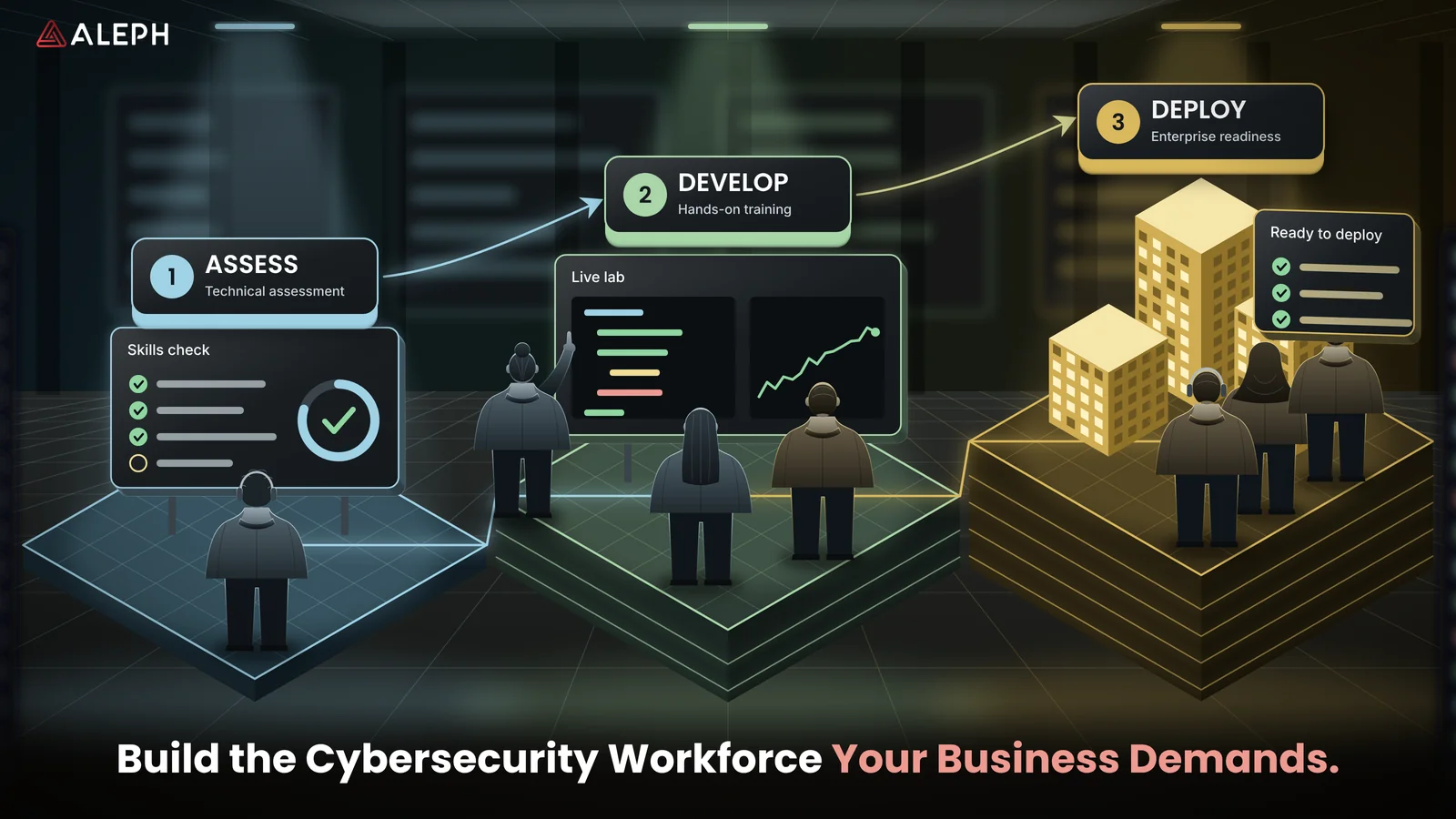
Aleph helps organizations assess technical potential, develop specialized talent aligned with business requirements, and deploy professionals with ongoing workforce support.
At Aleph, we help organizations turn critical technical talent challenges into sustainable workforce capabilities.
Through solutions including Select, Train, Deploy, Assessment as a Service, and In-House Talent Engine, we help businesses identify skills gaps, assess technical potential, develop specialized professionals, and align workforce capabilities with their technology and operational requirements.
Our approach extends beyond traditional recruitment and initial training, providing ongoing coaching, upskilling, reskilling, and qualified replacement support as business needs evolve.
For individuals pursuing cybersecurity careers, Aleph also creates pathways into the industry through aptitude-based selection, paid employment from day one, fully sponsored hands-on training, and deployment with organizations.
Because the objective isn't simply to fill cybersecurity positions. It's to build the technical capabilities businesses depend on.
The Next Cybersecurity Crisis Will Test More Than Technology
The DHS and Binance incidents demonstrate that even sophisticated technology environments can face significant security challenges.
No organization can eliminate every vulnerability or predict every attack.
But organizations can strengthen their ability to anticipate threats, reduce exposure, respond effectively, and adapt by investing in the people responsible for protecting their systems.
The future of cybersecurity depends not only on the technology we build, but on the people we develop to protect it.
At Aleph, we're helping organizations build that workforce.
Frequently Asked Questions
What happened in the DHS data breach?
On October 28, 2026, a database containing work details of more than 40,000 Department of Homeland Security employees and contractors, including ICE and CBP personnel, was reportedly published online. The information included names, job titles, work email addresses, phone numbers, and office locations. A hacktivist group claims it accessed the data through DHS's single sign-on system. Okta says its own systems were not compromised, and DHS has acknowledged a potential breach.
How did hackers steal $6.3 billion from Binance?
Binance says the attack may have started with a compromised DevOps engineer's laptop, potentially allowing access to a service container used to submit withdrawal transactions. Additional compromise points were subsequently reported. Most of the approximately $6.3 billion in affected assets was moved in roughly 20 minutes on October 29, 2026, and approximately $3 billion was reportedly frozen afterward.
Who was behind the Binance hack?
Blockchain analytics firms TRM Labs and Chainalysis have reportedly linked the attack with high confidence to TraderTraitor, a North Korea-linked hacking group. Binance has not confirmed attribution, and the investigation remains ongoing.
What is the cybersecurity skills gap?
The cybersecurity skills gap is the shortage of professionals with the specialized technical capabilities needed to protect increasingly complex digital environments. It affects areas including identity and access management, DevSecOps, cloud security, penetration testing, and incident response.
Why is identity security critical for enterprise cybersecurity?
Digital identities belonging to employees, contractors, and automated services control access to modern business systems. Compromised credentials or improperly configured permissions can allow attackers to bypass security controls and access sensitive infrastructure or information.
What is capability-based cybersecurity hiring?
Capability-based hiring evaluates candidates through practical technical assessments rather than relying exclusively on certifications, degrees, or years of experience. It helps organizations identify professionals with the demonstrated skills or aptitude to meet specific technical requirements.
How can organizations build a resilient cybersecurity workforce?
Organizations can strengthen cybersecurity workforce resilience by assessing practical capabilities, aligning training with their technology stack and operational requirements, and investing in continuous coaching, upskilling, and reskilling as threats evolve.
No resources match your search.