



13 Weeks Duration
AWS & Azure
Paid From Day One
No Degree Needed
Our engineers keep cloud platforms running across Singapore and the US
Aleph trains cloud and infrastructure engineers who build, automate, and secure the platforms organizations depend on.

SGTech Workforce Transformation Award 2025











Cloud infrastructure is growing fast
Cloud providers are expanding data center capacity in Singapore and the US, and organizations from banks to government agencies are building their own cloud teams. Every new platform needs engineers who can automate, deploy, and keep it running.
 Singapore
1.4GW
Data center capacity across more than 70 data centers, with at least 300MW more planned.
Source: IMDA Green Data Centre Roadmap
14 employers
Including DBS, HTX, ST Engineering, and Temasek, committed to a national cloud skills pathway.
Source: Skills Pathway for Cloud, SCS and IMDA
 United States
20.3%
Projected growth of the computing infrastructure, data processing, and web hosting industry from 2024 to 2034, the fastest in the information sector.
Source: IMDA Green Data Centre Roadmap
Double digit growth
DevOps engineers fall within the software developer category, projected to grow by 10% or more by 2034.
Source: Skills Pathway for Cloud, SCS and IMDA
Learn DevOps by doing DevOps
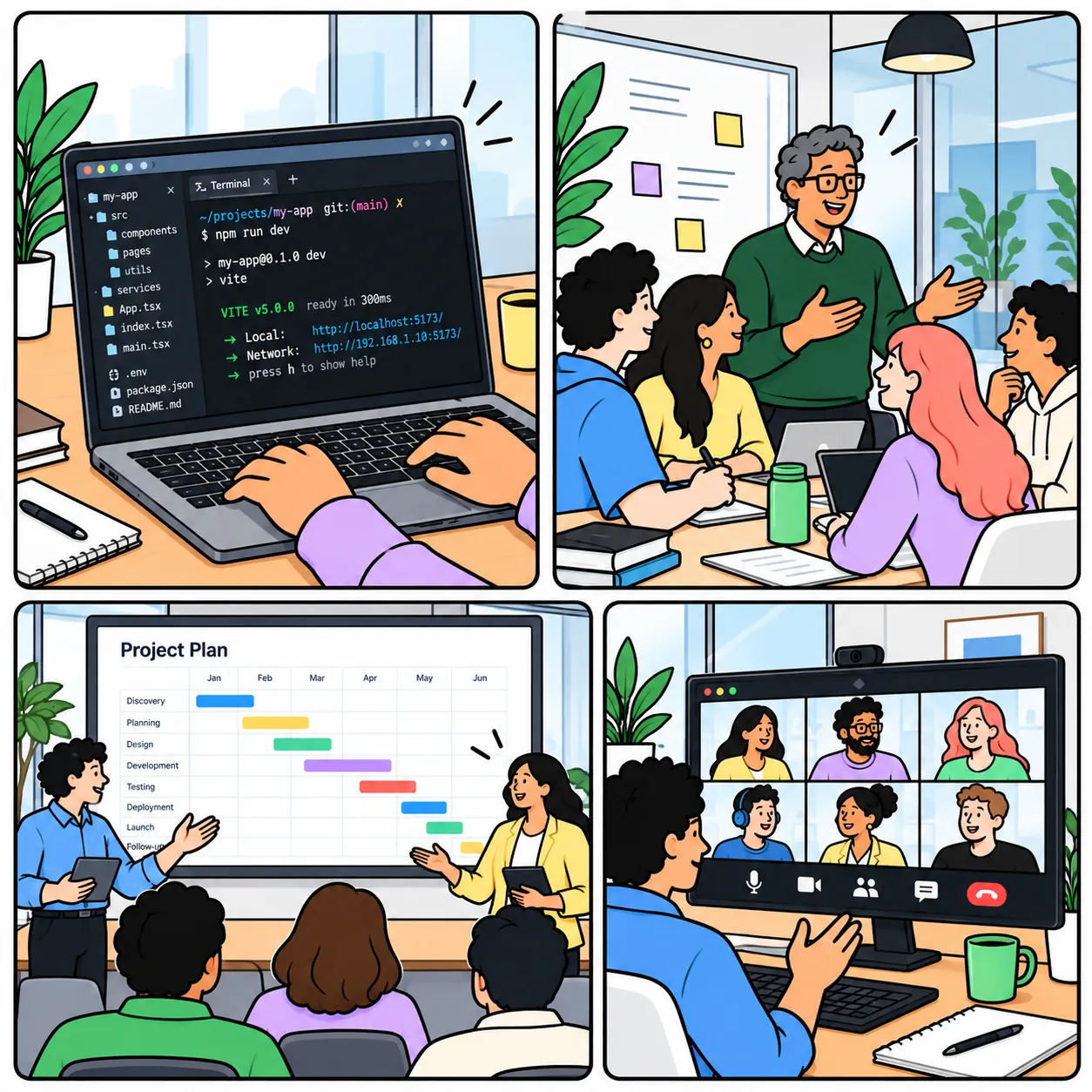
With expert guidance, you work through real scenarios involving automation, scalability, and security, the same problems cloud teams solve every day.
Build real pipelines
Automate builds, tests, and deployments from your first weeks in the program.
Learn from industry experts
Get guidance from engineers who architect and run cloud environments, plus career mentorship.
Work like a real team
Plan and track work in Jira and Confluence using agile practices.
Keep your skills current
Return for one week of advanced training every six months as cloud platforms and tools evolve.
Roles built on cloud
and automation
Graduates move into cloud and infrastructure roles across industries.

John Doe
Cloud DevOps
Engineer
Core capabilities

Jane Doe
Cloud Infrastructure Engineer
Core capabilities

Will Edwards
Cloud Operations
Engineer
Core capabilities

Laura Morrison
DevSecOps
Engineer
Core capabilities
Thirteen weeks from first script to production pipeline
Eleven modules covering scripting, cloud infrastructure, containers, automation, and security.
Foundations
WEEKS 1 to 4
WEEK 1
Foundations of Cloud DevOps
Scripting & Tooling
WEEKS 5-7
WEEK 2
Scripting Basics - Python & Bash
WEEK 3
DevOps Tooling Essentials
Containers & Cloud
WEEKS 8-9
WEEK 4
Containerization with Docker
WEEK 5
Cloud Infrastructure
Orchestration
WEEKS 12-13
WEEK 6-7
Advanced Kubernetes Usage
Infrastructure Automation
WEEK 8
Infrastructure as Code
WEEK 9
GitOps with FluxCD
WEEK 10
Configuration Management
Security & Operations
WEEK 11
DevSecOps and Security Management
WEEK 12
Monitoring and Logging
Final Capstone
WEEK 13
Summax Capstone
The platforms and tools cloud teams use every day
Get hands on with the same cloud platforms and DevOps tools used in production environments.
Cloud platforms
 AWS
AWS Azure
AzureScripting
 Python
 Bash
BashContainers and orchestration
 Docker
 Kubernetes
Infrastructure as Code
 Terraform
 CloudFormation
Configuration management
 Ansible
CI/CD and GitOps
 GitOps
 FluxCD
Security
Monitoring
 Elastic Stack
Collaboration
 Jira
Jira Confluence
Start where you are
Whether you are new to the field or switching careers, both tracks lead to a career in cloud engineering.
No experience required
New to Tech
Apply if you:
Are a recent graduate or new to IT; enjoy troubleshooting and figuring out how systems fit together; want structured training from the ground up; are ready for a full time career in tech.
In the cohort
Learn scripting, cloud, and automation from the fundamentals, then move into a full time placement with ongoing mentorship.
Mid Career Welcome
Career Switcher
Apply if you:
Are a working professional ready for a change; have some IT, support, or systems exposure to build on; want to move into cloud and DevOps; want a paid, structured route into a new career.
In the cohort
Turn your existing experience into cloud engineering skills, then move into a placement with a partner organization.
Selection steps
Logical Aptitude Test
a pseudo language developed by our trainers
Analytical Test
Get guidance from engineers who architect and run cloud environments, plus career mentorship.
Interview
applying concepts. The full process can take up to 1.5 months.
Both tracks require
Earn a paycheck while you learn the cloud
Many career transition courses leave you to find a job on your own after you finish. Here, you are a full time employee from day one, and you train toward a placement with a partner organization.
Paid from day one
Monthly training allowance plus full employee benefits.
No tuition
Training is fully sponsored, with a $0 program fee.
Expert mentorship
Career guidance from industry practitioners.
Employee benefits
Career guidance from industry practitioners.
Full time placement
A three year role with a partner organization, with a monthly salary.
Long term growth
One week of advanced training every six months during your placement.
Learn from engineers
who run cloud platforms
Your trainers build and operate cloud infrastructure and bring real deployment and incident experience into every module. You will train alongside recent graduates and career switchers building the same skills.

Questions about becoming
a Cloud DevOps Engineer
Cloud DevOps Engineers build and automate the systems that deploy and run applications in the cloud. They manage infrastructure as code, run CI/CD pipelines, and keep platforms secure, reliable, and scalable.
No. No experience or degree is required. You learn scripting, cloud, and automation from the fundamentals, starting with Python and Bash.
You work hands on with AWS and Azure, alongside the tools cloud teams use every day, such as Docker, Kubernetes, Terraform, and CI/CD pipelines.
Yes. You are a full time employee from day one, with a monthly training allowance plus full employee benefits. Training is fully sponsored, with a $0 program fee.
You move into a three year placement with a partner organization, with a monthly salary. You return for one week of advanced training every six months during your placement.
No. The program is 13 weeks of full time intensive training, and you are a full time employee from day one.
Recent graduates and people new to IT, and working professionals switching careers. You need to be eligible to work in the cohort location and show strong aptitude.
Selection has three steps: a logical aptitude test, an analytical test, and an interview. The full process can take up to 1.5 months.

Your path starts here.
Applications are open for upcoming cohorts in Singapore and the US. Seats are limited
