





Paid From Day One
Intensive AI Engineering
Real Career Pathway
Highly Selective
Built by Aleph.
Trusted by Leading Organizations.
Aleph selects, trains, and deploys technology professionals into some of the world's most demanding enterprise environments.
Our programs are built around the technical capabilities, problem-solving skills, and practical experience organizations need to turn technology investments into business results.
SGTech Workforce Transformation Award 2025











What is a Forward Integration Engineer?
A Forward Integration Engineer (FIE) helps organizations turn AI technology into working enterprise solutions. FIEs combine software engineering, AI integration, and technical problem-solving to connect applications, data, and enterprise systems. Working alongside experienced engineers and customer teams, they help build, implement, deploy, and support solutions in real-world environments.
Understand
Translate technical and business requirements into clear implementation tasks.
Build
Develop AI applications, integrations, APIs, and workflows.
Deploy
Help bring AI solutions into real enterprise environments.
Solve
Troubleshoot, optimize, and support solutions beyond initial implementation
Why Forward Integration Engineering Is Becoming an Important AI Career Path
AI is moving beyond experimentation.
Organizations are investing in AI applications, agents, and automation, but bringing these technologies into existing enterprise environments requires engineers who understand software, infrastructure, integration, and deployment.
That's creating opportunities for engineers who can bridge the gap between AI capabilities and real-world implementation.
Forward Integration Engineers are part of that shift, helping organizations connect AI to the systems, data, and workflows they already depend on.
AI Is Moving Into Production
Enterprises need engineers who can move AI applications beyond demonstrations and into operational environments.
Integration Is Critical
AI solutions must connect with existing applications, infrastructure, data, and security requirements.
Engineering Skills Are Evolving
Developers who combine software engineering with AI integration and deployment capabilities can contribute to a wider range of enterprise projects.
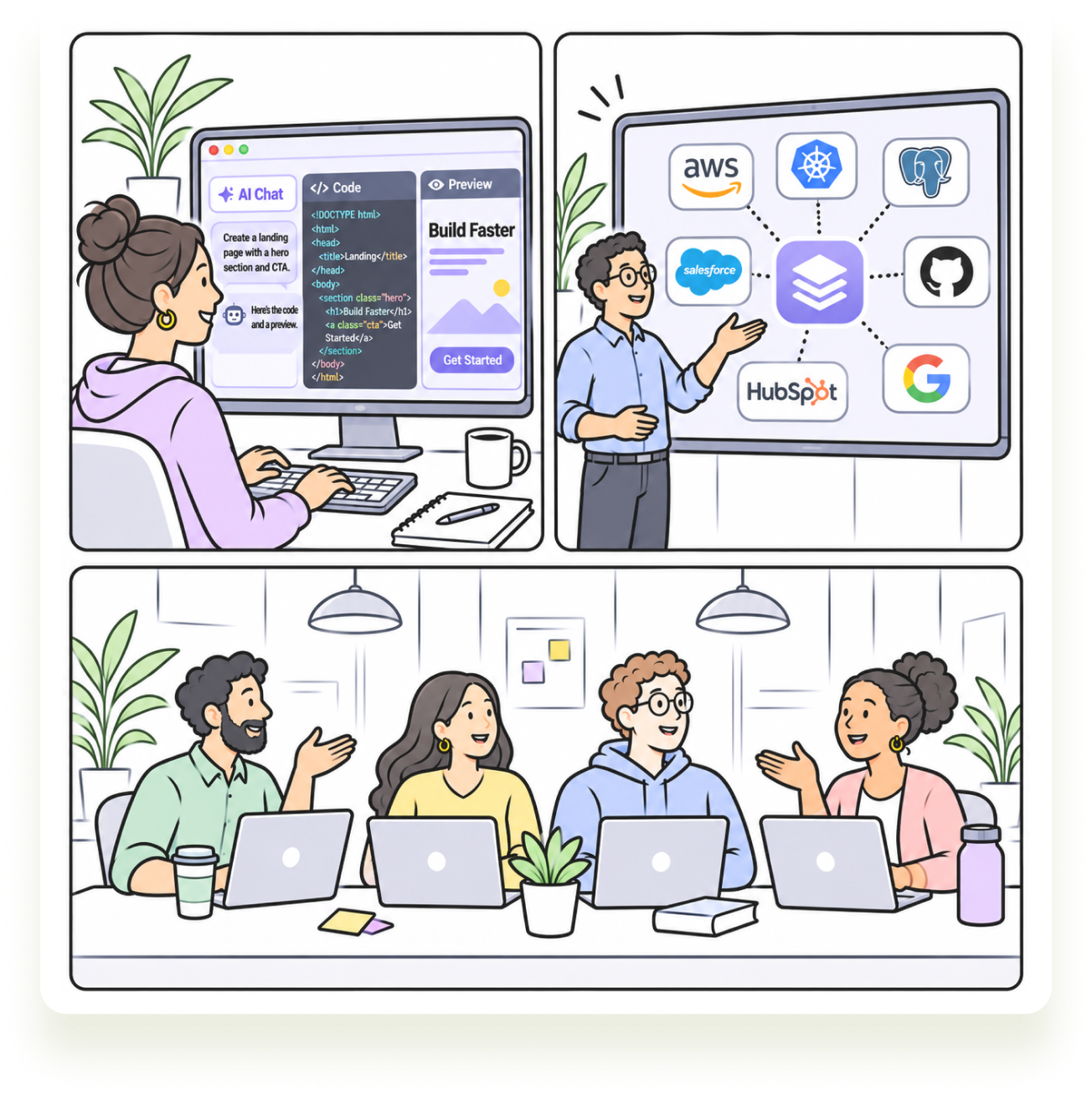
Everything Is Built Around What You Become.
You're not joining another course. You're joining a selective employment pathway designed to build on your engineering experience and prepare you for customer-facing AI implementation and deployment.
Engineer With AI Depth
Go beyond using AI tools. Learn how AI applications are built, integrated, tested, and deployed.
Enterprise Ready
Understand how to work with enterprise infrastructure, networks, security requirements, and complex technical environments.
Customer Facing
Develop the communication, collaboration, and problem-solving skills needed to work with customer teams and technical stakeholders.
Deployment Ready
Build the practical capabilities to take AI applications beyond proof of concept and contribute to production implementations.
From Engineer to Forward Integration Engineer.
Build on the technical experience you already have and develop the AI, deployment, and customer-facing skills needed to take the next step in your engineering career.

Today
Your Engineering Background
Skills

Your next step
Forward Integration Engineer (FIE)
For engineers with approximately 2–3 years of professional experience who want to expand into enterprise AI engineering.
Build the skills to integrate applications, solve technical challenges, support deployments, and collaborate with customer teams.

Where it can take you
As you gain deeper technical expertise, deployment experience, and customer-facing responsibilities, your career can progress toward more advanced engineering roles.
Potential Career Paths
Two Pathways.
One Shared Journey.
Forward Integration Engineers begin with four weeks of engineering foundations before joining Forward Deployed Engineers for a shared 10-week AI engineering program.
The additional foundations phase strengthens the software engineering and enterprise infrastructure skills needed to succeed in more advanced AI implementation and deployment work.
Foundations
FIE Training starts here.
WEEKS 1-4
WEEK 1-2
Engineering Foundations: Python for production applications, testing, linting, Git practices, software development lifecycle, secrets management, and CI/CD fundamentals.
WEEKS 3–4
Enterprise Environments: Network architecture, OSI model, DNS, firewalls, access control lists, NAT, routing, and network troubleshooting.
Services & Infrastructure
WEEKS 5-7
WEEKS 5-6
Applied AI Foundations: Large language models, prompting, model APIs, embeddings, retrieval-augmented generation, and AI-powered application development.
WEEK 7
Cloud Deployment: AWS EC2, S3, IAM, Lambda, VPC, Docker, Kubernetes, Terraform, and Ansible.
Applied AI
WEEK 8-11
WEEKS 8-9
AI Development: Data preparation, LLM APIs, Hugging Face, local models, RAG, AI agents, tools, memory, and evaluation.
WEEKS 10-11
AI Tooling and Serving: Model Context Protocol (MCP), tool integration, AI-assisted development, prompt engineering, vLLM, Triton, SageMaker, and NVIDIA NIM.
Production & Capstone
WEEKS 12-14
WEEKS 12-13
Production Readiness: Monitoring, observability, AI security, Splunk, SPL, dashboards, alerting, and SIEM use cases.
WEEK 14
Final Capstone: Deploy a production-oriented LLM application, document its architecture, prepare a runbook, and present the completed solution.
The stack you will learn to use
Build practical experience across the programming languages, AI technologies, cloud platforms, deployment tools, and security systems used in enterprise environments.
Language and code
 Python
 Flask
 GitOps
 SQL
Cloud and infrastructure
 AWS EC2
 S3
 IAM
 Lambda
 VPC
 Terraform
 Ansible
Containers and delivery
 Docker
 Kubernetes
AI development
 LLM APIs
 Hugging Face
 Ollama
 Gradio
Agents and tooling
 MCP
Serving and deployment
 vLLM
 NVIDIA Triton
 AWS SageMakerNVIDIA NIM
Monitoring and security
 Splunk
Choose the path that matches your experience
Both programs prepare engineers for customer-facing AI deployment work. Your experience determines where you begin and the level of technical ownership you're prepared to take on.
2 to 3 Years Required
Forward Integration Engineer
Apply if you:
- Have approximately 2–3 years of professional engineering experience.
- Work in software, backend, cloud, data, ML, DevOps, or support engineering.
- Are comfortable with Python and have experience working in production codebases.
- Want to develop your AI engineering, integration, and deployment capabilities.
In the cohort
Begin with four weeks of engineering foundations before joining the shared AI engineering program.
Build under the guidance of experienced engineers, take ownership of practical technical components, and demonstrate your work during the final capstone.
Both tracks require
Not sure which pathway fits you? Our selection team can assess your engineering experience and recommend the appropriate entry point.
Apply nowSelected for Skill and Potential.
Trained for Impact. Deployed Where It Matters.
Many training programs teach you new skills and leave you to find your next opportunity on your own.
Aleph takes a different approach.
You join as a full-time employee, complete intensive technical development, and prepare for deployment into enterprise environments where your skills can contribute to real projects.
We Invest in Your Career From Day One.
Training is only one part of the opportunity. At Aleph, you become an employee from day one and receive the technical development, mentorship, and support needed to prepare for real enterprise work.
Employed From Day One
Join Aleph as a full-time employee and receive compensation throughout training.
Fully Sponsored Training
Aleph covers the cost of your intensive technical development.
Employee Benefits
Receive applicable Aleph employee benefits during your employment.
Expert Mentorship
Learn from practitioners across AI, cloud, software engineering, cybersecurity, and enterprise delivery.
Career Development
Strengthen your technical, communication, problem-solving, and customer-facing capabilities.
Long-Term Community
Continue developing through Aleph mentors, peers, customer projects, and professional connections.

Have the Engineering Foundation?
Bring the Drive to Build What’s Next.
Bring approximately two to three years of relevant engineering experience, working knowledge of Python and production systems, and the ability to commit to intensive full-time development. We are looking for engineers ready to stretch beyond their current responsibilities into enterprise AI integration.

Questions worth asking
A Forward Integration Engineer builds, integrates, deploys, and supports technical solutions in enterprise environments, combining engineering expertise with AI capabilities and customer-facing collaboration.
No. It is an employment and career development pathway. You are hired first, then trained through intensive practical work in applied AI engineering and enterprise delivery.
Requirements depend on the track. FIE applicants should have approximately two to three years of professional engineering experience, a relevant technical foundation, strong problem solving ability, and the capacity to learn quickly.
14 weeks, full time. You start with four weeks of engineering foundations, then join Forward Deployed Engineers for the shared 10-week AI engineering program, ending with a final capstone.
Yes. You are a paid Aleph employee for all 14 weeks of training, not a student. Compensation and benefits are shared with qualified applicants during the process.
Graduates work on Aleph initiatives or customer projects, matched on skills, experience, performance, location, and business need.
Yes. Aleph pays your salary and the full cost of training, so we ask for a minimum service period in return. You will see the exact length, the terms, and the route to permanent conversion or direct employment in writing before you accept anything. Nothing about it is a surprise later.
Yes. Engineers with five or more years of experience apply to the Forward Deployed Engineer track, built for established engineers moving into AI deployment, technical leadership, and customer facing delivery.
Build AI that moves beyond the demo.
Take your engineering experience further. Develop the skills to integrate, deploy, and support AI solutions in real enterprise environments.